Designing the Wattpad Reward Ecosystem: Coin Wallet Feature
TL;DR
Led team of 4 on Strategic Research to design Wattpad’s Coin Wallet feature; 75% adoption rate in one quarter. Over two months, I guided our team - 1 Senior Designer, 1 Senior Product Manager, 1 Associate Designer, and me - on strategic discovery and exploration research. Beginning with competitor research and testing, we mapped and tracked comparable reward ecosystems to prototype and design a Coin Wallet feature. More than 30 staff contributed - Product, Engineering, Design, Research - from Discovery to Launch.
Role - Project Lead
Led team of 4
Duration
2 months (Discovery); 6 months (total, to launch)
Methods
Journey Mapping, Task Analysis, Competitive Analysis, Requirements & Constraints, Persona Building, Social Media Monitoring, Forum Post Analysis, Usability Testing
Tools
Miro, Figma, Google Sheets, Loom
Resourcing
30+ people (full build)
Situation: The Problem
Wattpad, a storytelling platform connecting writers and readers with 94M global users, began as a Toronto startup now owned by the world’s largest digital comics platform, Naver Webtoon ($2.67B valuation).
To grow and engage our userbase, we began considering what habitualizing rituals we could build, and landed on a coin-based reward strucutre.The ultimate aim was to encourage the use of coins to purchase (unlock) Wattpad Original stories. Our team sought to understand other entertainment (content or education) B2C apps reward ecosystems, to design and launch our own version.
Task: What Answers Do We Need?
Assigned as Project Lead, I devised our plan for competitive research and testing, market research, and customer journey mapping for our chosen competitor apps and platforms.
Our main question:
- How do successful apps encourage users to keep returning with coins and other rewards?
First step of the Discovery & Exploration, conversations with our Business and Marketing teams to determine which information we already had (let’s not reinvent the wheel and duplicate work!), ensuring our cross-functional partners are in the loop.
Action: What We Did
Leading the research, with support provided by a senior PM, a senior and junior designer, I identified which apps to research and test, and delegated them to the team.
The two months were broken down like this:
-
Week 0: Market Research (Social Media Monitoring, Forum Post Analysis), Competitor Identification
-
Weeks 1-3 or 4: Competitor Testing and Usability (in my case, I began a learning journey with Duolingo, using the app daily, for 4 weeks)
-
Weeks 3-5: Journey Mapping, Competitive Analysis (incl. Competitor Scorecard, Figure 5), Task Analysis
-
Weeks 4-6: Human-Centred Design, Requirements & Constraints, Persona Building
-
Weeks 6-8: Design Concepts, Prototype Feedback & Testing, Design Review
Tools to Display the Research
Duolingo was my own testing and analysis contribution to the team’s output (the main focus of this case study). Illustrated below are what I designed and developed: 1. Earn, Buy, Spend: Subsection of Whole Rewards Ecosystem; 2. Whole Rewards Ecosystem; 3. Rewards Ecosystem Video Tutorial; and Section 4. Competitor Scorecard (The Scorecard, while researched and designed by me, was a tool the whole team contributed their research to).
1. Earn, Buy, Spend: Subsection of Whole Rewards Ecosystem
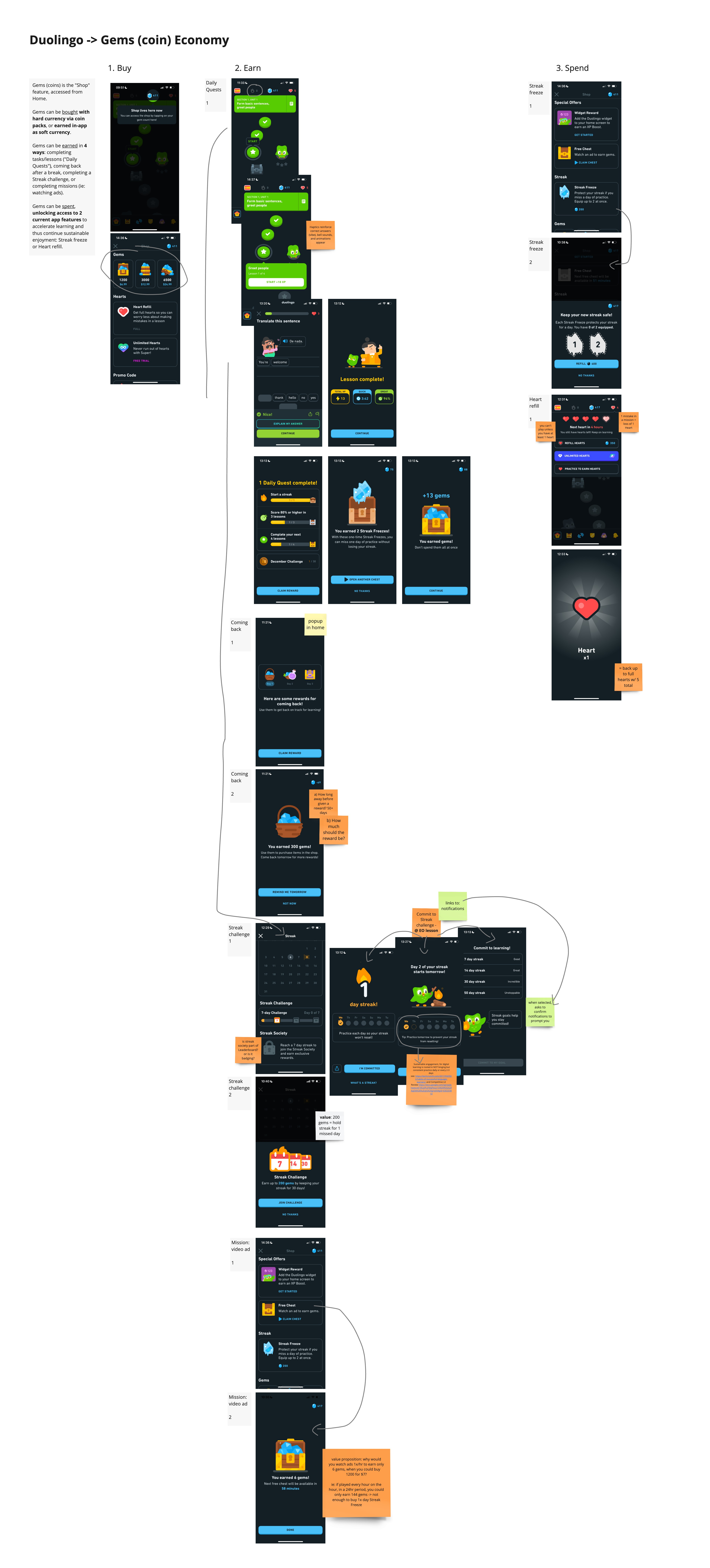
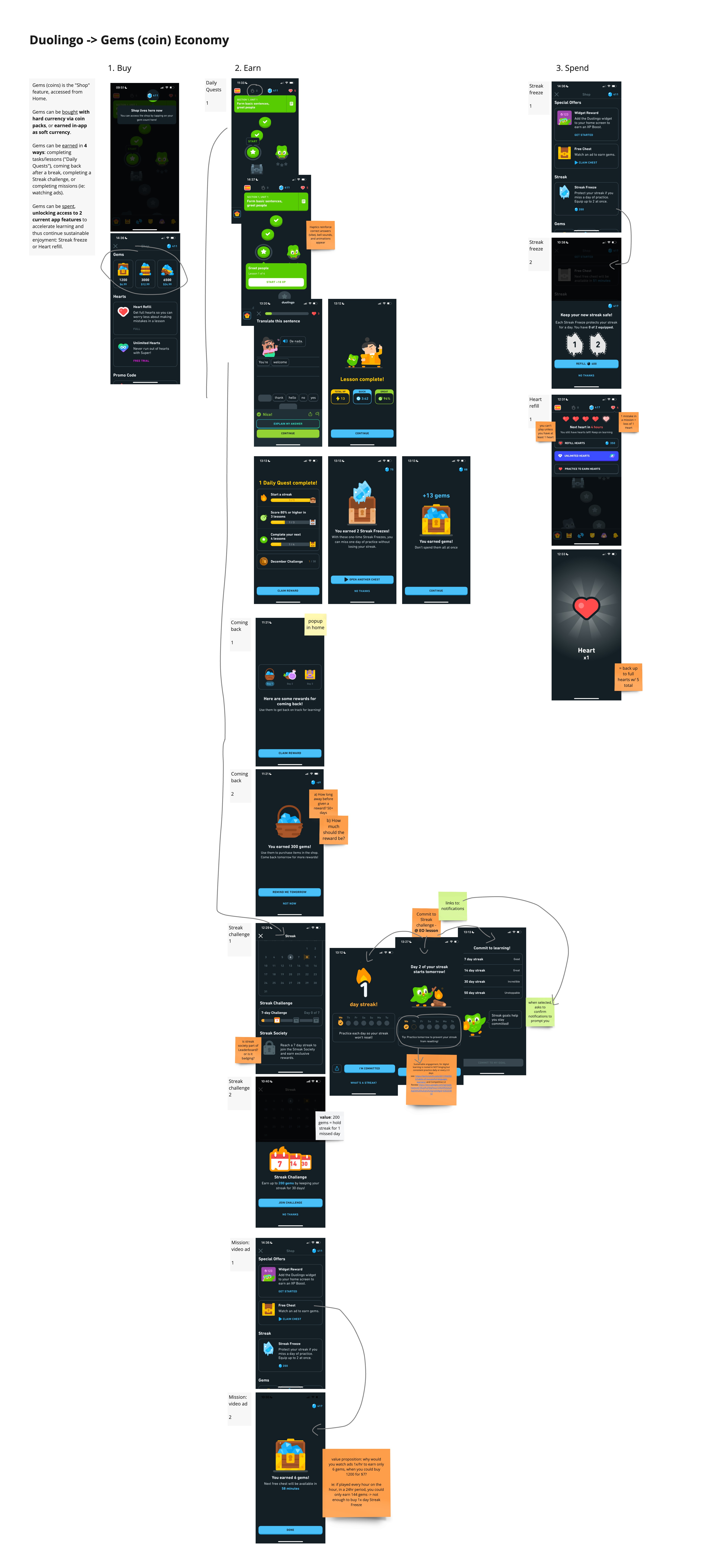
Figure 1. High-level process for Duolingo coin use
Duolingo’s coins are known as Gems. These Gems are accessed in Home, Top Row, including during learning Quests.
Gems can be purchased with hard currency (real money), or earned in-app, as soft currency, in 4 ways: completing tasks or lessons (known as Daily Quests); returning to the app after a long break; completing a Streak challenge of uninterrupted daily app use; and by completing Missions (like watching ads).
Gems can be spent to unlock either Streak Freezes (to buy yourself a free-pass to not use the app for 1 day) or for Heart Refill (to continue Daily Quests after mistakes made).
2. Whole Rewards Ecosystem
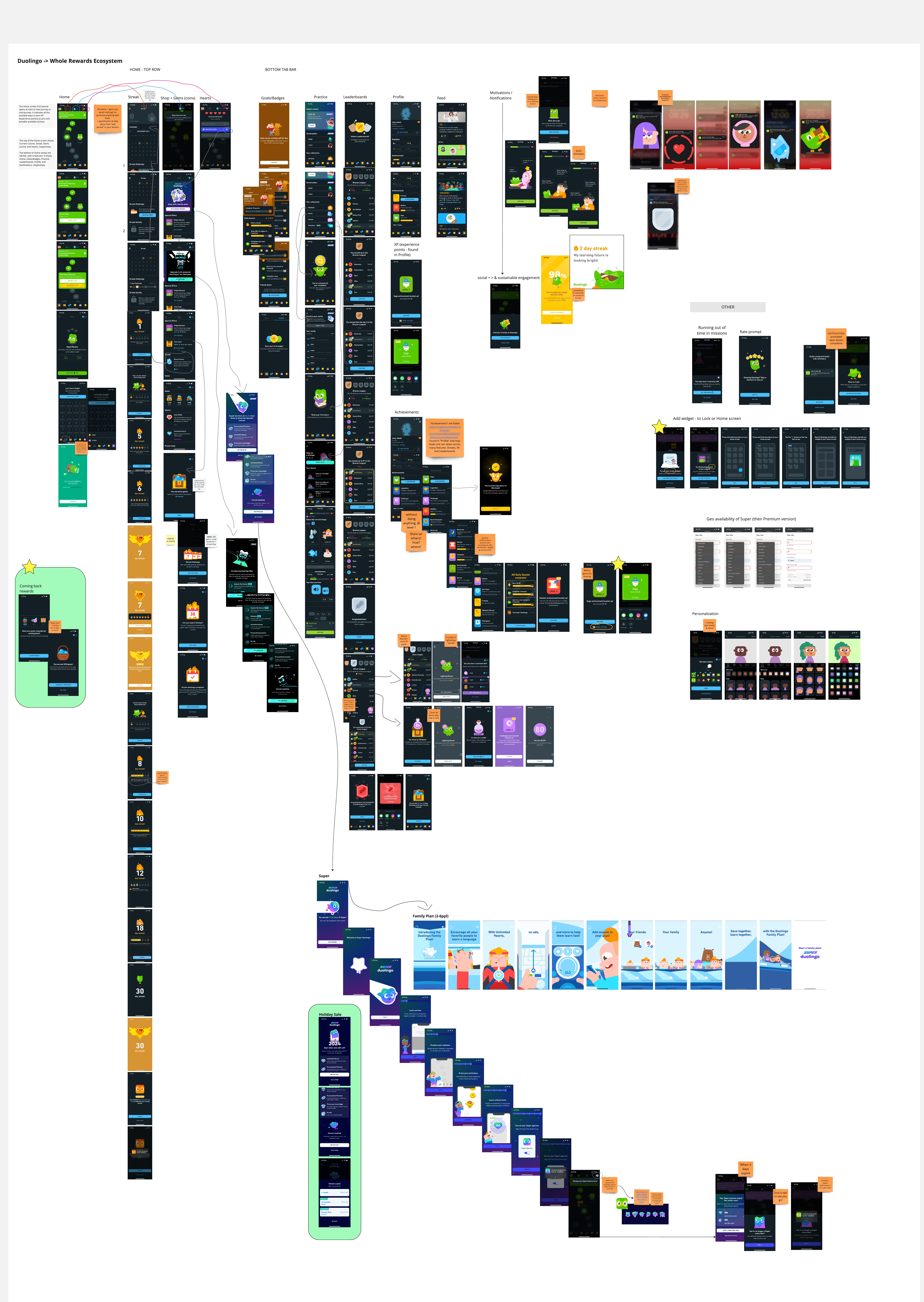
Figure 2. User journey through Duolingo’s Rewards Ecosystem
Duolingo’s rewards user journey is robust, by far the most vast we saw. Aiming for simplicity, outlined here are the sections and what each contain, broadly (illustrated across the top of Figure 2).
- Home - Top Row
Home: Learning journey map
Streak: Number of days played
Shop: Gems
Hearts: Lengthens learning play (bypassed if Premium or Super member, not explored here)
- Bottom Tab Bar
Goals + Badges: Daily Quests and your achievements
Practice: learn basics without mistakes penalty, as with learning journey tests
Leaderboards: Competitions with other users, based on frequency of in-app learning and proficiency levels
Profile: Who you are, your statistics and achievements
Feed: In-app announcements
Duolingo’s Notifications are one of the most developed features, both in-and-out-of-app. Infamous, these notifications are often cheekily encouraging, if not snarky, and some even refer to the tone as negging. Regardless, these notifications excel at is informing you of everything: Come Back Rewards, Practice Today Reminder, Streaks, Compete with Friends, Leaderboard Status Change (someone beat you or you beat them), Rate prompt, Time Running Out on Missions, Add Widget to Lock or Home Screen, and my favorite, Progress Stats 🤓.
Notifications are likely a large part of Duolingo’s successful Reward Ecosystem because, out of the large array of prompt types, there is a high likelihood that at least one connects.
3. Reward Ecosystem Video Tutorial
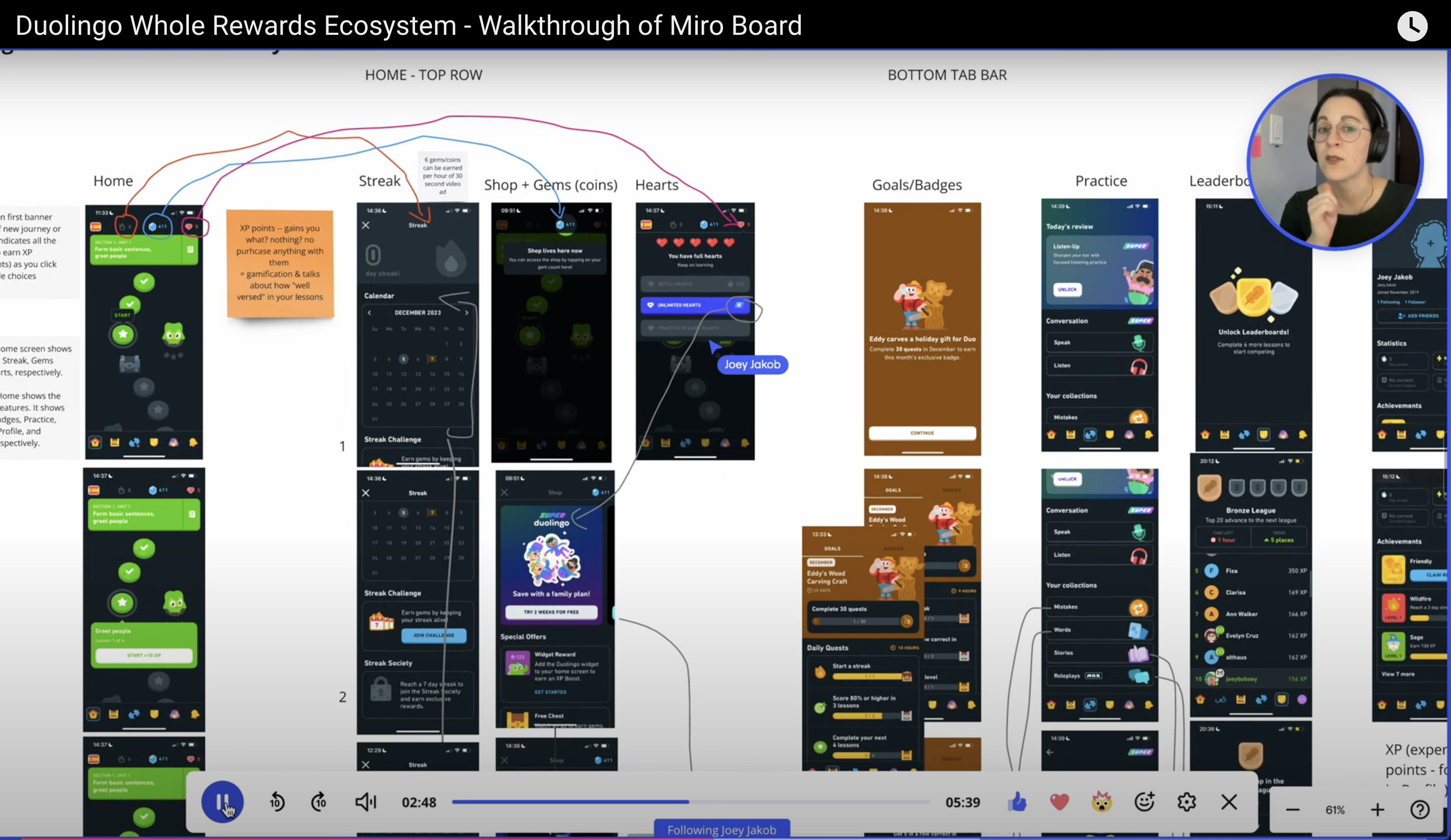
Figure 3. Screengrab of Home and Bottom Tab Bar, from Duolingo Reward Ecosystem Video Tutorial [link]
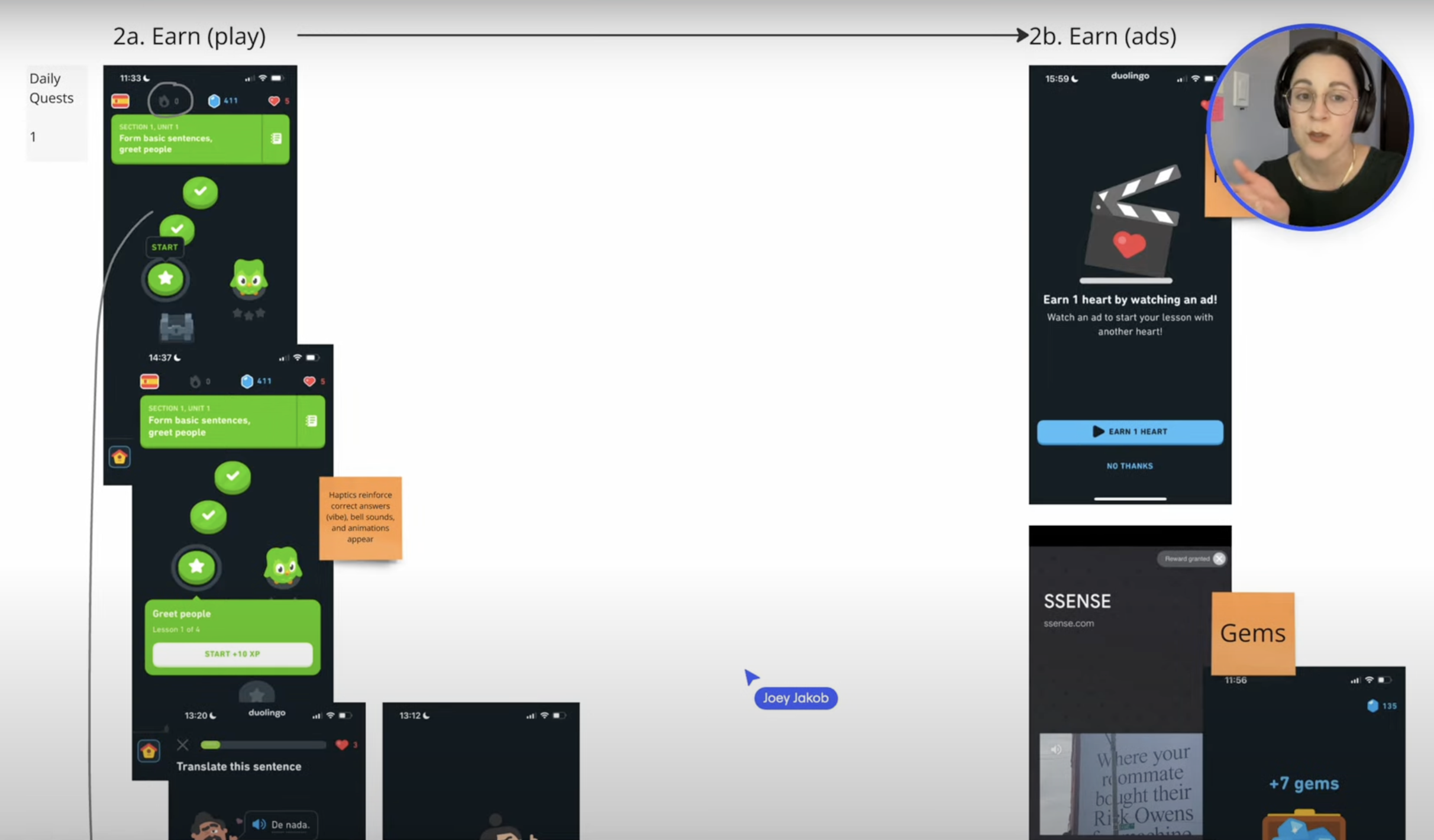
Figure 4. Screengrab of two ways to earn Gems in Duolingo - Learning Play and View Ads - from Duolingo Reward Ecosystem Video Tutorial [link]
4. Competitor Scorecard
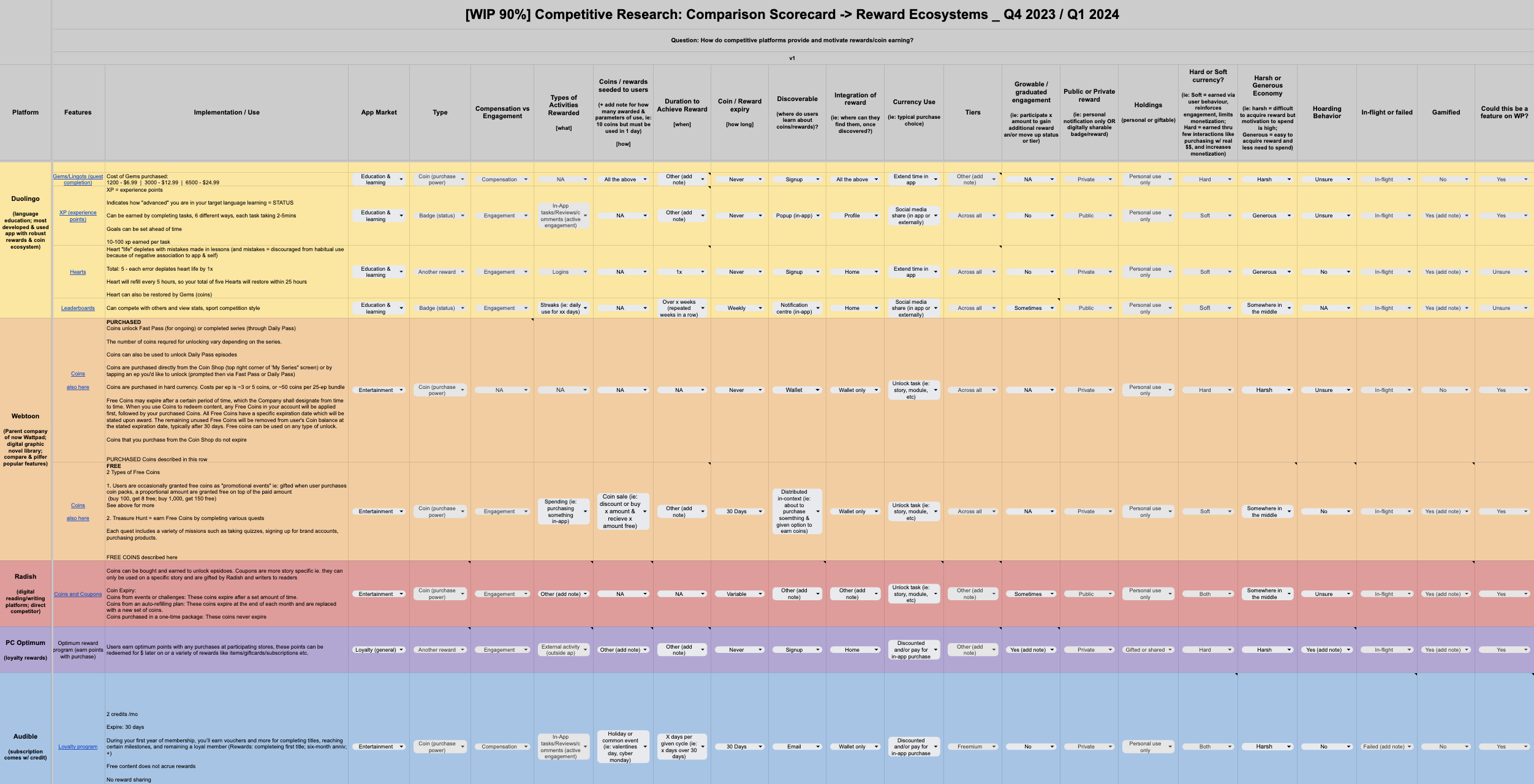
Figure 5. Screengrab of the Competitor Scorecard
The Competitor Scorecard I created (Figure 5) not only tracks my team’s research contributions, but also offers a high level, 1-page competitive analysis. The column furthest left names the apps we researched, while each success row from left to right details competitive categories for analysis.

Figure 6. Screengrab of the Competitor Scorecard, comparison headings only
For ease, the headings on the Competitive Scorecard (Figure 6) are from left to right, respectively:
Basic Characteristics:
- Platform
- Features
- Implementation/Use
- App Market
- Type
Ecosystem Structure:
- Compensations vs. Engagement
- Types of Activities Rewarded
- How Coins Are Seeded to Users
- Duration to Achieve Reward
- Discoverable
- Integration of Reward
- Purchase Choice
Coin Composition:
- Expiry
- Tiers
- Growable Engagement
- Public or Private Reward
- Giftable or Personal Holdings
- Hard or Soft
- Harsh or Generous Economy
- Hoarding Behavior
Viability:
- In-Flight or Failed
- Gamified
- Usable Feature on Wattpad?
Each of the column categories contain drop-down selections, ensuring comparison between each. For instance, the Coin Expiry category offers these selections: 1 Day; 30 Days; Weekly; or Never. Another example, the Discoverable category options are: Distributed in-context (about to purchase something); Email; Notification Centre (in app); Popup (in app); Notification (out of app); Signup; and Wallet.
While expansive and vast, this information helped us determine what to focus on for Wattpad’s Coin Wallet MVP V1, centred on buying, earning, and spending coins, accompanied by corresponding Notifications.
Result: Metrics Unlocked
In addition to designing a Wallet for buying, earning, and spending coins, we included an expiring feature for the earned coins (while purchased do not expire). Earned by watching ads, and then prompted with notification, expiration encourage spending on Wattpad Originals (stories written exclusively for Wattpad by star writers). Launched May 2024 alongside improvements in Notifications, we saw a 75% adoption rate in coin use - purchasing, earning, and spending - during the first quarter post release.
Here are the designs, now live in the app:
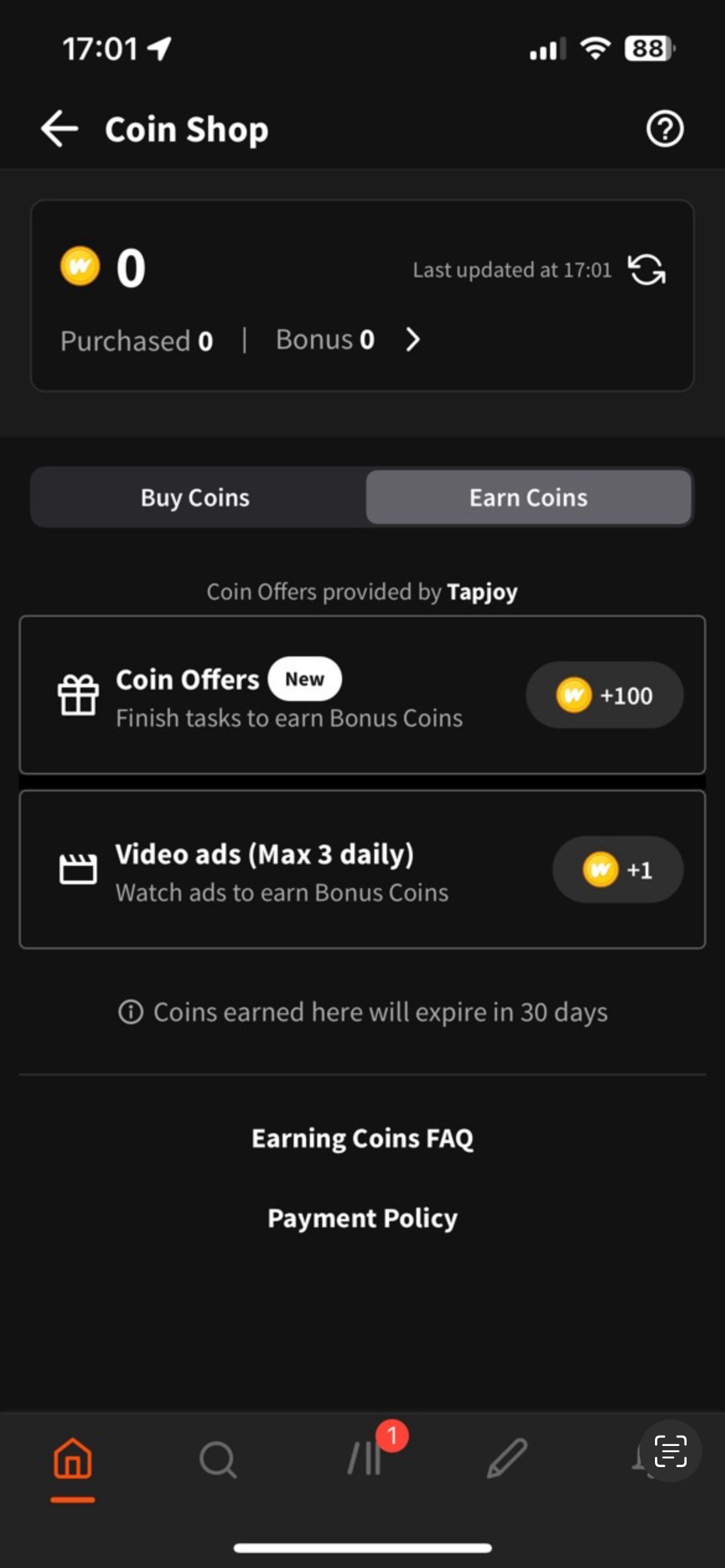
Figure 7. Screengrab of Earn Coins Wallet Feature
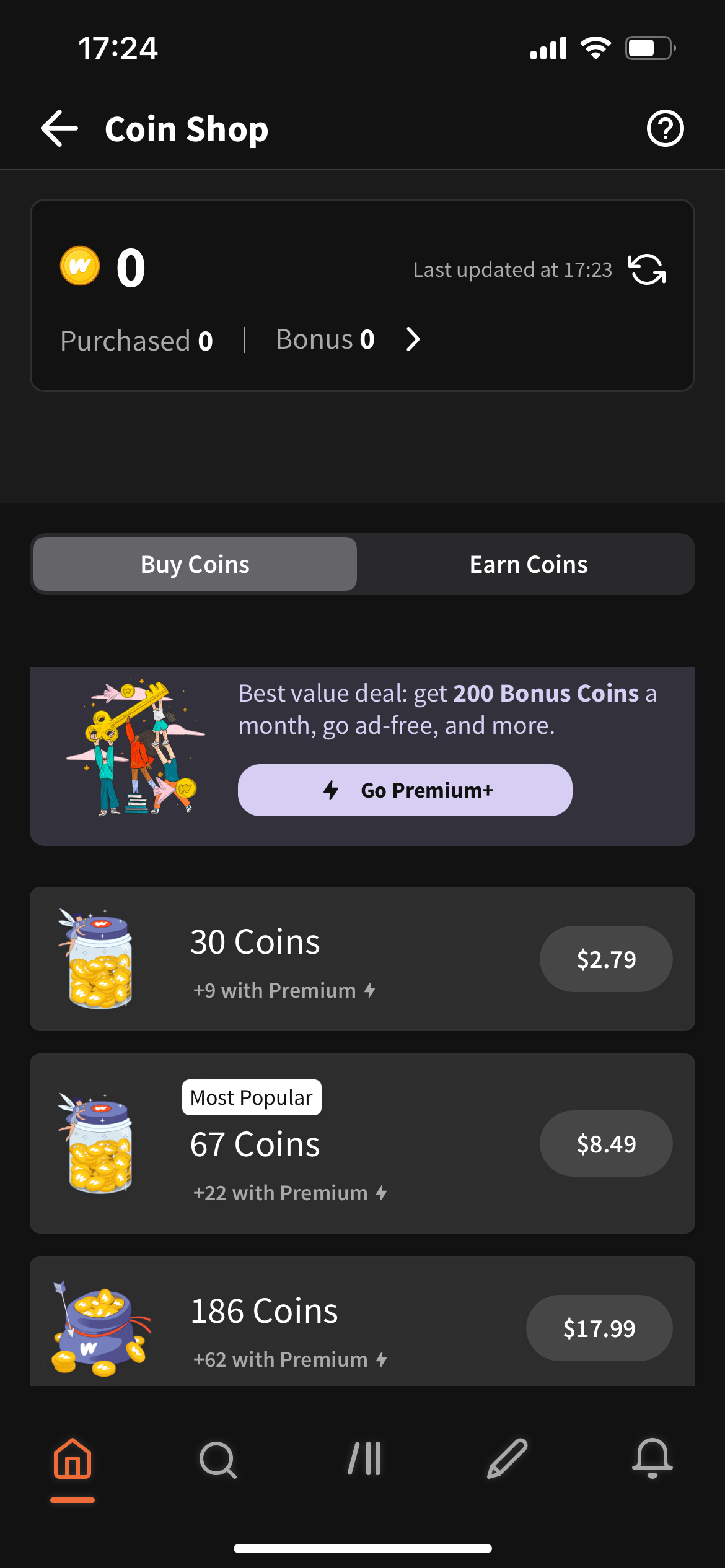
Figure 8. Screengrab of Buy Coins Wallet Feature
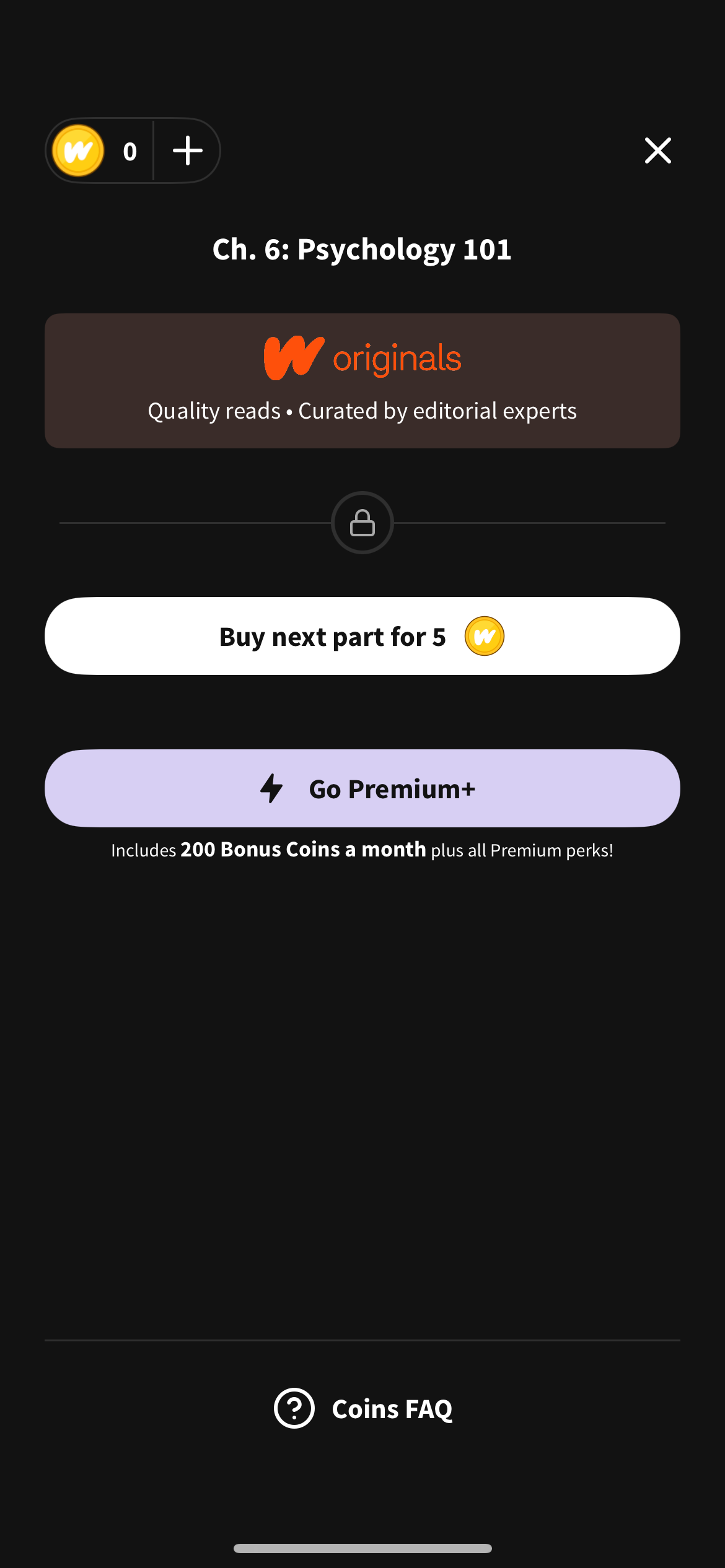
Figure 9. Screengrab of Spend Coins -> Buy Next Part prompt, at end of free available reading parts; next part can be purchased for 5 coins
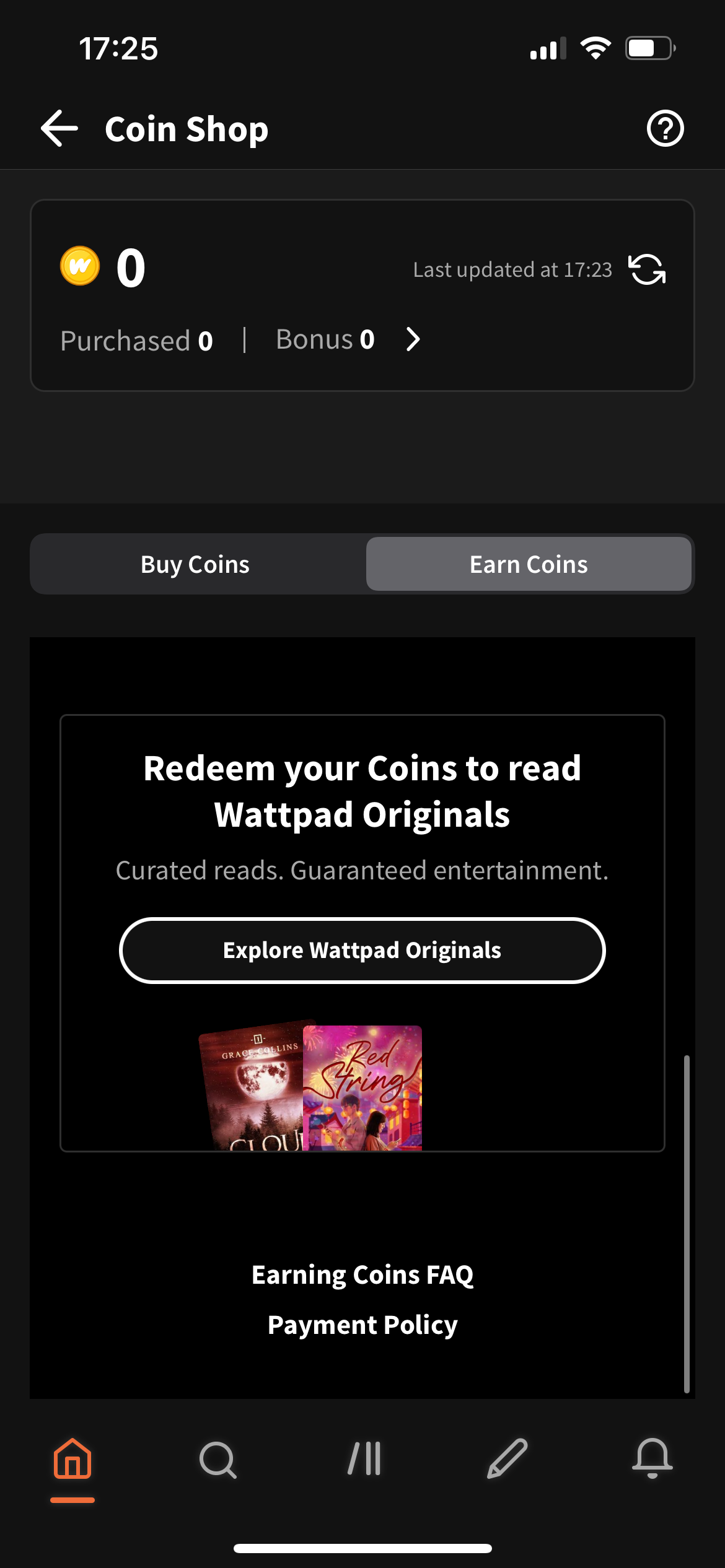
Figure 10. Screengrab of Spend Coins -> Redeem prompt in Coin Shop, to read Wattpad Originals (paid stories)
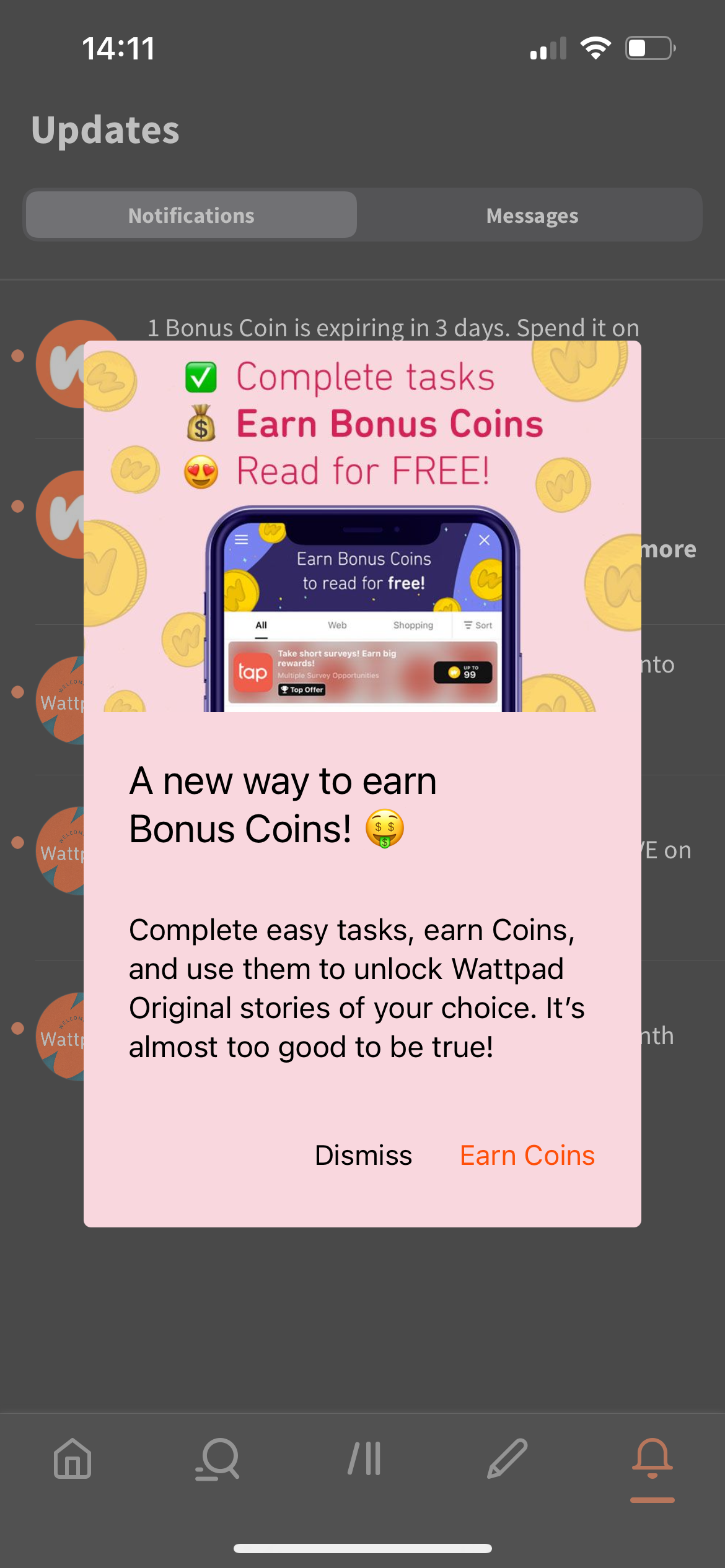
Figure 11. Screengrab of in-app prompt to earn gamified Bonus Coins
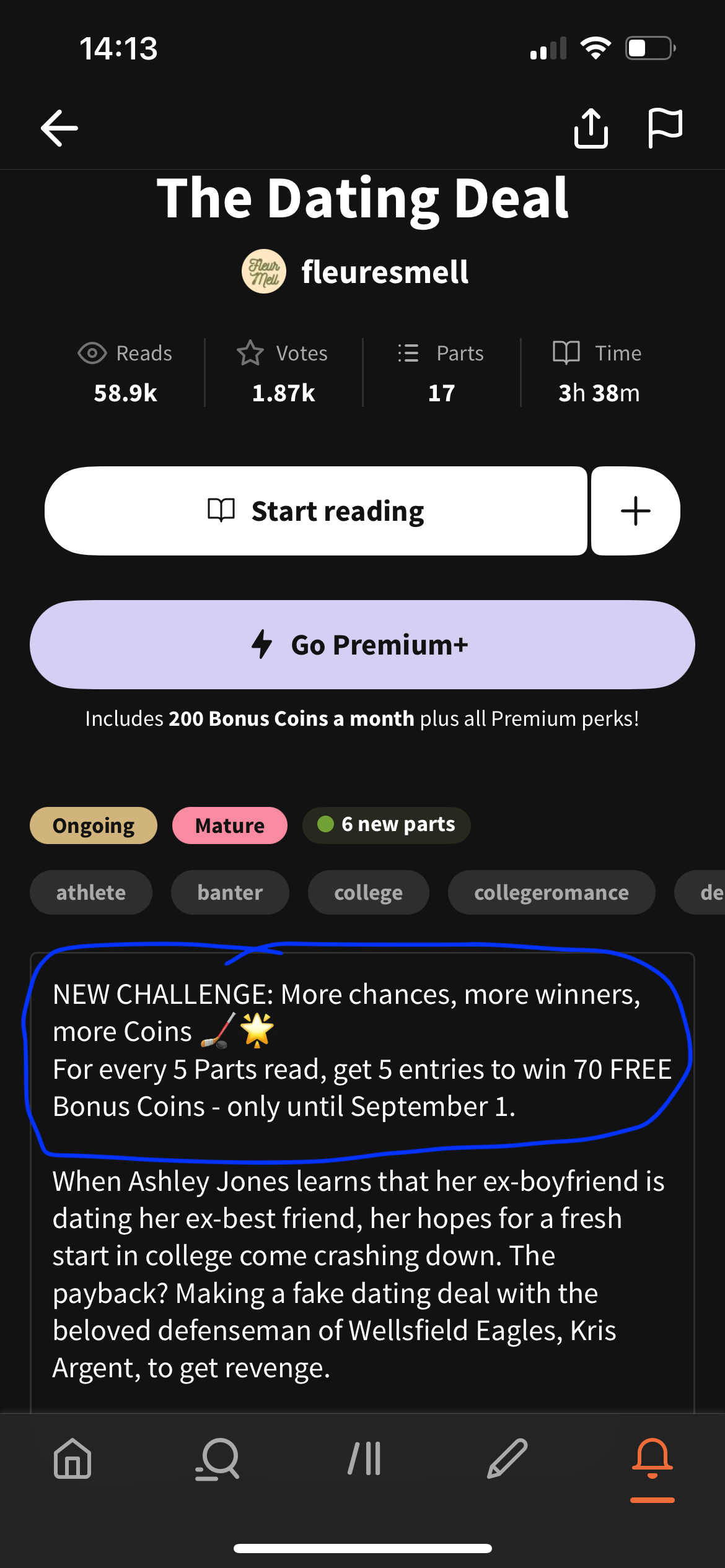
Figure 12. Screengrab of Reading Challenge to Earn gamified Bonus Coins
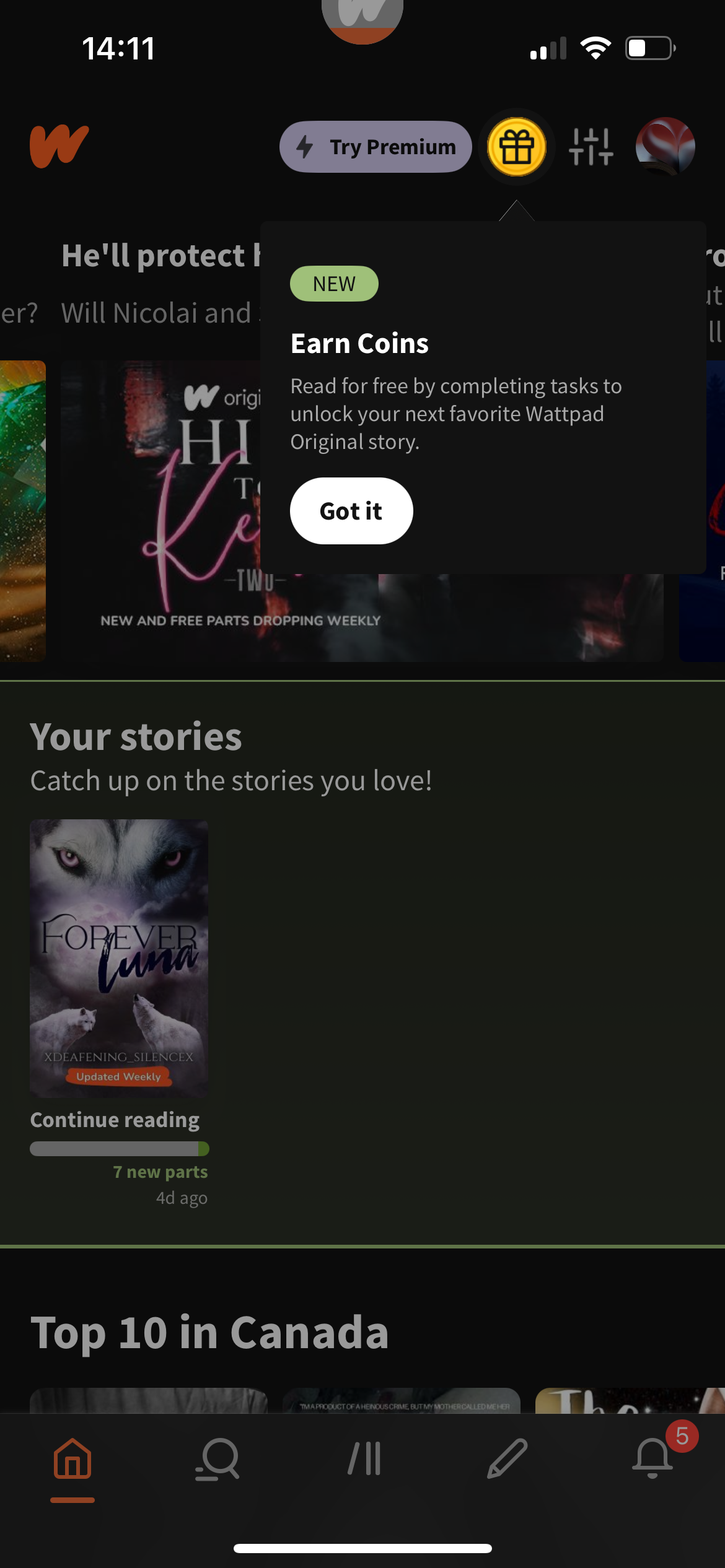
Figure 13. Screengrab of In-app new user prompt to earn Coins
Next Time: Scaling Considerations
With the successful launch of the MVP V1, I’d lean more into a strategic foresight approach by expanding on the behavioral science elements. Specifically, and as seen in the Competitive Scorecard headings (Figure 6) I’d explore motivations and make recommendations on these:
- Hoarding Behavior
How and why does coin hoarding happen, and when might it be useful to hoard? Personas to illustrate? And when hoarding occurs, HMW prompt those prone to hoarding to, comfortably, spend?
- Harsh vs. Generous Economies
If more difficult to acquire, are coins more valued? Or if more easy to acquire, is there less need to spend? HMW encourage an enjoyable yet competitive economy?